From the paint on your walls to the sauce on your pasta, lead contamination is far more widespread than most people realise. We break down the hidden risks — and what you can do about them today.
Most people associate lead poisoning with old houses and peeling paint. And while lead-based paint is one of the biggest culprits — particularly in homes built before 1978 — the reality is that lead has been woven into everyday life for well over a century. It was added to paint, plumbing, petrol, solder, ceramics, and even food packaging. The result? A legacy of contamination that still affects homes, buildings, and consumer products today.
A recent study from the FDA has added another layer to this story — detecting elevated levels of lead in foods as common as tomato sauce and baking powder. It’s a reminder that lead doesn’t just live on walls. It’s in our environment, our supply chains, and sometimes our food. And the first step to protecting yourself and your family is knowing where to look.
Lead in Everyday Products: More Common Than You Think
The FDA’s Total Diet Study (TDS) has been tracking contaminants in the American food supply since 1961. In results released earlier this year covering 2021 and 2022, researchers found some striking data points that deserve attention.
Tomato pasta sauce — a staple in millions of family kitchens — recorded lead levels of 223 parts per billion (ppb) in one national composite sample, the highest lead reading across the entire five-year study period. Baking powder, an ingredient quietly present in hundreds of everyday recipes, showed consistently elevated readings of lead, mercury, and arsenic across three consecutive years of sampling.
These aren’t niche or obscure products. They’re in almost every pantry. And because the TDS uses composite samples pooled from multiple brands to reach 50% market share, a single heavily contaminated product could be pulling the average up significantly — meaning individual products may be even higher.
This isn’t cause for panic, but it is cause for awareness. Lead accumulates in the body over time. There is no safe level of lead exposure — especially for children, pregnant women, and developing foetuses. When exposure comes from multiple directions simultaneously (food, water, paint, dust), the cumulative effect is what matters.
The Bigger Picture: Why Lead Is Still a Problem in 2026
Lead-based paint was banned for residential use in the United States in 1978. That ban came after decades of overwhelming evidence linking lead to serious neurological harm — particularly in young children, for whom even low-level exposure can cause irreversible developmental delays, reduced IQ, and behavioural problems.
But here’s the thing: the ban didn’t remove lead from existing structures. It simply stopped new lead paint from being applied. According to the US Census Bureau, approximately 38 million homes in the country still contain lead-based paint. Many of those homes look fine on the surface — painted over, renovated, well-maintained. The lead is there, underneath, waiting to be disturbed.
Renovation work is particularly high-risk. Sanding, drilling, cutting, or scraping painted surfaces in pre-1978 homes generates lead dust — invisible, odourless, and incredibly dangerous. Contractors, painters, plumbers, and DIY homeowners are all at risk. Lead dust settles on floors, work surfaces, and hands. It gets tracked through the house. Children playing on the floor ingest it. Workers carry it home on their clothes.
Beyond paint, lead can also lurk in older plumbing solder, certain ceramic glazes, vintage jewellery, imported toys, and as the FDA study shows, in food and food ingredients where contamination has entered the supply chain. The range of potential exposure sources is broad — which is exactly why testing matters.
“There is no safe level of lead exposure. The science has been clear on this for decades. The question isn’t whether lead is dangerous — it’s whether the lead in your home has been identified and addressed.”
Who Is Most at Risk?
ILead exposure affects everyone, but certain groups face disproportionately high risk:
- Children under 6 — their developing nervous systems are far more sensitive to lead’s toxic effects than adults. Even small amounts can cause lasting cognitive damage.
- Pregnant women — lead stored in bones can be released during pregnancy, crossing the placenta and affecting the developing baby.
- Tradespeople and contractors — painters, renovation specialists, plumbers, and electricians working in older buildings face regular occupational exposure. EPA regulations under the RRP (Renovation, Repair and Painting) Rule require lead-safe work practices in pre-1978 homes.
- Homeowners doing DIY renovations — without professional training or testing, it’s easy to unknowingly disturb lead paint and contaminate your living space.
- Residents of older housing stock — particularly in low-income communities where homes are older and maintenance resources are limited.
The Solution Starts with Testing
You can’t see lead. You can’t smell it or taste it. The only way to know whether a painted surface in your home or worksite contains lead is to test it — and that’s where Luxfer LeadCheck™ comes in.
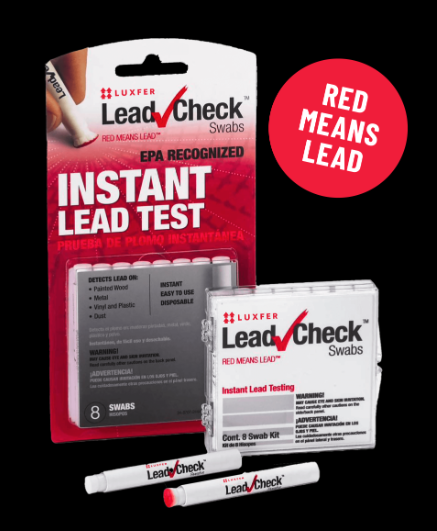
LeadCheck™ Swabs are an EPA-recognised lead detection solution trusted by professionals and homeowners alike. They’re fast, accurate, and require no lab equipment or special training to use. Simply crush and activate the swab, apply it to any surface — painted wood, metal, drywall, ceramics, or more — and watch for the result. A pink or red colour change indicates the presence of lead. It really is that straightforward.
For tradespeople, LeadCheck™ swabs are an essential compliance tool. Before beginning any renovation or repair work in a pre-1978 property, testing for lead is not just best practice — in many situations, it’s a legal requirement. Having reliable, on-site testing capability means you can identify hazards before work begins, protect your team, and give your clients confidence that you’re working safely and professionally.
For homeowners, LeadCheck™ swabs provide peace of mind. Whether you’ve just bought an older property, are planning a renovation, or simply want to know whether the walls your children play against contain lead, these swabs give you an immediate, reliable answer — without expensive lab fees or waiting days for results.
What the FDA Study Tells Us About the Bigger Picture
The FDA’s Total Diet Study findings on tomato sauce and baking powder are a useful illustration of a broader truth: lead contamination is an ongoing, systemic issue, not a problem that was solved in 1978.
The FDA’s own Closer to Zero programme — launched to reduce children’s dietary exposure to toxic contaminants — is evidence that regulators are still wrestling with the scale of the problem. Consumer advocacy groups have been pushing for tighter lead limits in food ingredients for years. As recently as 2020, a coalition of consumer protection organisations petitioned the FDA to update standards that were set decades ago and no longer reflect current scientific understanding of the risks.
That petition has not yet been acted on.
What this means in practical terms: don’t assume that because something is on a supermarket shelf, it contains no harmful contaminants. Don’t assume that because a building looks modern it has no lead paint underneath. And don’t assume that because the ban happened in 1978, the problem was solved.
Awareness, vigilance, and testing are the best tools available — and they’re more accessible than ever.
Take Action: Test Before You Assume
Whether you’re a homeowner doing weekend renovations, a contractor starting a job in an older building, or simply someone who wants to know more about what might be lurking in your walls, LeadCheck™ Swabs make testing easy.
Here’s what you get with Luxfer LeadCheck™:
- Instant, on-site results — no lab wait times
- EPA-recognised accuracy you can rely on
- Works on painted wood, metal, drywall, ceramics, and more
- Easy enough for homeowners, trusted by professionals
- An affordable alternative to expensive laboratory testing
Lead has been a silent presence in our built environment for generations. The science is clear, the regulatory history is clear, and the risk is clear. The good news is that identifying the risk has never been simpler.
Red means lead. If you see red, you know. And if you know, you can act.
What Recent Research Shows — and How to Reduce Risk at Home
Lead poisoning is often treated as a problem of the past, but recent research shows it remains a real and ongoing threat to children in the United States.
What the Research Found
-
Lead poisoning has not been eliminated. Children are still being hospitalized and treated for high lead exposure.
-
Disparities remain significant. Higher rates were observed among children from lower-income households, rural communities, and neighborhoods with fewer economic resources.
-
Environmental exposure plays a major role. Many cases were linked to lead hazards commonly found in older housing.
Why Lead Exposure Is Especially Dangerous for Children
-
Peeling or deteriorating paint in homes built before 1978
-
Lead-contaminated dust from renovation or repair work
-
Lead in soil near older structures
-
Plumbing materials that leach lead into drinking water
Because symptoms are often subtle or absent, families may not realize there is a problem until a blood test shows elevated levels.
Prevention Starts Before Exposure Occurs
Public health screening and treatment are essential, but the most effective protection is identifying lead hazards before children are exposed. That starts with understanding where lead may be present in the environment.
Using LeadCheck™ Swabs for Early Detection
-
Test painted surfaces and other materials children may contact
-
Get immediate visual results without sending samples to a lab
-
Take action earlier to reduce the risk of exposure
While surface testing does not replace medical screening, identifying lead in the environment can help prevent exposure before it leads to elevated blood lead levels.
Why Environmental Lead Testing Still Matters
Families, property owners, and child-care operators who take a proactive approach to lead awareness can significantly reduce those risks.
Taking Action
If you live in or manage an older property, or if children spend time in your home or facility:
-
Test suspect surfaces for lead before renovating or repainting
-
Pay attention to areas where paint is chipping or worn
-
Use reliable screening tools like Luxfer LeadCheck™ Swabs as part of a broader lead-safety plan
Reducing lead exposure doesn’t start in the hospital. It starts with awareness, prevention, and early detection.
EPA RRP Rule Enforcement Is Increasing, and Recent Cases Show Why LeadCheck Testing Matters
One of the most common reasons contractors give for not purchasing LeadCheck is the belief that the EPA rarely checks residential job sites. In reality, enforcement of the Renovation, Repair and Painting (RRP) Rule has been steady, and the penalties have been substantial. Over the past several years, the EPA has issued fines, ordered corrective actions, and halted work when contractors failed to follow required lead-safe procedures. In each of the cases below, these problems could have been avoided by starting the job with a quick LeadCheck test.
LeadCheck swabs are easy to use, take less than a minute, and provide instant EPA-recognized results. There is no additional equipment required and no waiting for lab work. Testing at the start of each job gives contractors a solid record of compliance and reduces the risk of costly enforcement.
The following examples highlight how real EPA enforcement is and why testing matters.
New York contractor penalized for multiple RRP violations
A renovation contractor in New York faced enforcement after inspectors discovered work taking place without certified renovators. Containment was incomplete, dust was spreading into living areas, required lead hazard information was not given to occupants, and recordkeeping was inconsistent.
The contractor ultimately agreed to pay $168,000 in penalties and had to implement additional corrective measures. A simple LeadCheck test at the start of each project could have prevented most of these violations.
Chicago area contractor ordered to pay penalties and perform additional lead abatement
In another significant case, a contractor operating in the Chicago area was cited for widespread failure to comply with the RRP rule. Investigators found uncertified subcontractors, poor use of lead-safe work practices, inadequate dust control, and missing paperwork across several project sites.
The settlement included a $400,000 civil penalty along with up to $2 million in required lead-based paint abatement work in affected communities. This case stands out because many of the issues stemmed from starting work without confirming whether lead-based paint was present. A quick test could have changed the outcome entirely.
National contractor fined for subcontractor lead safety failures
A national home improvement company was also fined after EPA inspectors found that subcontractors were performing RRP work without proper certification. Required lead-safe procedures were not consistently followed, and pre-renovation testing documentation was missing or incomplete.
The company paid $400,000 and was required to establish a company-wide lead safety compliance program. Even large firms face significant consequences when they fail to verify lead conditions before starting work.
Why LeadCheck remains one of the most valuable tools for RRP compliance
These enforcement actions make one thing clear: the EPA is paying close attention to lead safety, and contractors who skip testing are putting themselves at unnecessary risk. LeadCheck provides fast, reliable confirmation of whether lead-based paint is present and gives contractors the documentation they need to show compliance.
A LeadCheck swab costs only a few dollars and delivers results in under a minute. Compared to fines of $168,000, $400,000, or even multi-million-dollar settlements, testing is one of the most cost-effective steps a contractor can take.
In honor of National Lead Poisoning Prevention Week (NLPPW), Luxfer LeadCheck™ is proud to offer 10% off all wholesale orders from October 19th through October 25th. This is your chance to stock up on the EPA-recognized lead detection solution trusted by professionals, contractors, and safety-conscious homeowners across the United States.

🛡️ Why Choose Luxfer LeadCheck™ Swabs?
✅ Instant, Reliable Results Detect lead-based paint in seconds with a simple color change — pink or red means lead is present.
✅ EPA-Recognized Accuracy Our swabs meet stringent EPA standards, ensuring dependable results for both DIY users and certified professionals.
✅ Easy to Use Just crush, shake, and swab. No lab equipment, no waiting — just fast, actionable answers.
✅ Versatile Application Effective on painted wood, metal, drywall, and more — perfect for home inspections, renovations, and property management.
✅ Cost-Effective Safety Avoid expensive lab tests. LeadCheck™ Swabs are an affordable, accessible way to protect families and communities.
🏠 Lead Safety Starts with Awareness
Lead exposure is a serious health risk — especially for children and pregnant women. During NLPPW, we’re doubling down on our mission to make lead detection simple, fast, and accessible. Whether you’re a contractor working on pre-1978 homes or a parent concerned about your child’s environment, LeadCheck™ gives you the power to act.
📦 Don’t Miss This Limited-Time Offer
From October 19–25, enjoy 10% off all wholesale orders placed through our distributor network. It’s the perfect time to replenish your inventory and reinforce your commitment to lead safety.
👉 Stay tuned — we will share how to claim you discount week starting 19th!
Red Means Lead. Let’s build a safer, lead-free future — one swab at a time.
National Lead Poisoning Prevention Week (NLPPW) runs from October 19th to October 25th, spotlighting the ongoing risks of lead exposure and the importance of prevention. Led by the U.S. Environmental Protection Agency (EPA), Center for Disease Control (CDC), and the US Department of Housing and Urban Development (HUD) this annual campaign raises awareness about the dangers of lead, particularly from older buildings and household materials.
Despite decades of progress, lead poisoning remains a serious public health issue in the United States. According to EPA data, up to 41% of U.S. census tracts show elevated risk for lead exposure, especially in states with older housing infrastructure like Ohio, Michigan, Pennsylvania, and New York. Since the ban on lead-based paint use in 1978, overall exposure to the dangers of lead poisoning has been significantly reduced. However, for individuals living in older homes or spending time in aged buildings, the risk of exposure remains higher than we would like. Children are particularly vulnerable, with even low levels of lead exposure linked to developmental delays, learning difficulties, and behavioural issues.
This year, LeadCheck™ is proud to take part in NLPPW through active engagement on Facebook and LinkedIn. The campaign will share timely updates, educational content, and community-focused messages to help raise awareness and encourage safe practices. It’s a great opportunity to learn more about lead risks and how to detect them whether you’re a homeowner, contractor, or inspector.
And there’s more to come—distributors should keep their eyes peeled for a special promotion during NLPPW. LeadCheck™ will be offering an exclusive discount to support wider access to lead detection tools. Details will be announced via social media and email, so stay tuned!
Why choose LeadCheck™? These swabs are a simple, fast, and reliable solution for detecting lead on wood, metal, and drywall. Just crush, shake, and swab if lead is present, the swab turns bright red. Red Means Lead™. They’re odorless, non-staining, and disposable, making them ideal for quick checks in homes, schools, and workplaces. Whether you’re renovating a pre-1978 property or simply want peace of mind, LeadCheck™ Swabs offer an immediate and accurate way to detect lead hazards.
Join us this NLPPW in spreading awareness, protecting families, and promoting safer environments. Follow LeadCheck™ on Facebook and LinkedIn, share the message, and help make lead poisoning a thing of the past.
Big news from the U.S. Department of Housing and Urban Development (HUD): they’ve just announced $364.5 million in funding to help communities tackle lead-based paint and other health hazards in older homes. If your local or state government is working to make housing safer—especially for families with young children—this is a major opportunity.
Who Can Apply?
State and local governments from all types of communities—urban, suburban, and rural—are encouraged to apply. The deadline to submit applications is August 14, 2025.
👉 https://www.grants.gov/search-results-detail/359873
What the Grants Cover
This funding is part of HUD’s Lead Hazard Reduction (LHR) Grant Program. It’s designed to help communities:
– Find and fix lead-based paint hazards in privately owned homes (both rentals and owner-occupied)
– Make homes safer and healthier for residents
There’s also an option to apply for Healthy Homes Supplemental funding, which can be used to address other safety issues in the same homes being treated for lead.
How the Money Breaks Down
Here’s how HUD plans to distribute the $364.5 million:
– $120.1 million for Lead Hazard Reduction Demonstration (LHRD) grants — focused on areas with the highest need
– $203 million for Lead-Based Paint Hazard Control (LBPHC) grants — open to all other eligible areas and first-time applicants
– $41.4 million in Healthy Homes Supplemental funding — for additional repairs and hazard mitigation
HUD expects to award funding to around 50 applicants.
Why LeadCheck Matters
If your team is applying for this grant or already working on lead hazard reduction, having the right tools is key. LeadCheck is an EPA-recognized instant lead test that makes it easy to detect lead-based paint on several different surface types on the spot. It’s fast, reliable, and simple to use—perfect for inspectors, contractors, and housing agencies looking for an EPA approved option. Using LeadCheck can help improve assessments and keep your project on track.
If you’re working on a home or childcare facility built before 1978, there’s a high likelihood the paint contains lead—a hazardous substance, particularly for children. The EPA’s Renovation, Repair, and Painting (RRP) Rule was established to safeguard families and workers by enforcing safe renovation practices. If you’re a contractor, landlord, or property manager, this rule applies to you—and LeadCheck is the quick, reliable tool to help you comply.

Understanding the EPA’s Renovation, Repair and Painting (RRP) Rule
The EPA’s RRP Rule mandates that any renovation, repair, or painting work that disturbs painted surfaces in pre-1978 “target housing” or “child-occupied facilities” must adhere to lead-safe practices. This rule, fully effective since April 2010, applies to:
- Contractors and tradespeople (painters, electricians, plumbers, etc.)
- Landlords performing maintenance on rental properties
- House flippers and rehabbers
- Property managers and maintenance staff
Jobs covered by this rule include window replacements, sanding, scraping, and demolition. Violations can lead to penalties up to $44,792 per day, per violation under the Toxic Substances Control Act (TSCA). Repeated offenses or deliberate non-compliance can also result in court-ordered abatement work, loss of licensing, and reputational damage. Some contractors have even been ordered to perform community remediation projects or pay restitution for unsafe practices.
Does This Apply to You?
Covered Projects
If you disturb painted surfaces in homes, apartments, schools, or daycare centers built before 1978, you’re likely covered by this rule.
Who Must Comply
Anyone paid to do renovation work, including contractors, subcontractors, landlords, or house flippers, must comply.
Exemptions
- Homeowners working on their own occupied homes (with no tenants or daycare use)
- Minor repairs disturbing less than 6 sq ft per room (interior) or less than 20 sq ft (exterior)
- Certified lead-free housing, verified by an EPA-certified inspector
What Does RRP Compliance Involve?
To stay compliant, you must:
- Be an EPA-Certified Firm
- Use at least one Certified Renovator per job
- Distribute the “Renovate Right” pamphlet to occupants before work begins
- Follow lead-safe work practices: contain the workspace, avoid high-dust methods, use HEPA-filtered vacuums, and protect occupants
- Perform cleaning verification using EPA standards or conduct clearance testing
- Maintain detailed records for 3 years, including test results, training certifications, and signed acknowledgments
The Role of Lead Testing in RRP Compliance
Contractors have two options:
- Assume lead is present and follow all RRP protocols on disturbed surfaces.
- Test surfaces using an EPA-recognized method. If a surface is certified lead-free, RRP requirements can be waived for that component.
This is where LeadCheck becomes an essential part of your workflow.
When Is LeadCheck Used?
LeadCheck is used before renovation work begins to determine if lead paint is present. It’s ideal for:
- Walls, trim, doors, windows, and other painted surfaces
- Jobs where you want to limit RRP compliance to only lead-positive areas
- Documenting testing results for your EPA-required project records
If LeadCheck confirms no lead is present, you can proceed without full containment and other RRP steps for that surface.
Why Choose LeadCheck?
LeadCheck Swabs are trusted by contractors nationwide because they’re:
- EPA-recognized for use on wood, drywall, plaster, and ferrous metal
- Fast – results in just 30 seconds
- Simple – no lab equipment or special training needed
- Reliable – consistent and accurate results with no shelf-life
- Cost-saving – rule out lead on certain surfaces and reduce compliance burdens
What Happens If You Don’t Comply?
Non-compliance with the RRP Rule can lead to serious consequences:
- Fines of up to $44,792 per violation per day
- Mandatory community abatement or lead hazard reduction projects
- Legal action, license suspension, and damage to your business reputation
Real-World Example: Logan Square Aluminum Supply
In one major case, a Chicago-based window replacement company was found to have performed renovations on over 40 homes and a childcare facility without following RRP protocols. Violations included:
- No containment or dust control
- Use of uncertified workers
- No distribution of Renovate Right pamphlets
- No testing or documentation
The result? A $2 million court-ordered lead abatement program and a $400,000 civil penalty. This case highlights that the EPA takes enforcement seriously, especially in projects that impact families with children.
A Brief History of the RRP Rule
- 1992: Congress passes the Residential Lead-Based Paint Hazard Reduction Act (Title X)
- 2008: EPA issues the final RRP Rule
- April 2010: RRP Rule goes into effect nationwide
- 2010: EPA removes the controversial “opt-out” provision
- 2015–2021: Clearance standards and dust-lead hazard levels are lowered
- 2024: EPA proposes additional post-renovation clearance requirements to strengthen protections
The RRP Rule continues to evolve as science advances and awareness of lead poisoning grows. LeadCheck remains a key tool in helping contractors adapt to these regulatory changes.
Understanding the EPA’s Renovation, Repair, and Painting (RRP) Rule
The Environmental Protection Agency (EPA) established the Renovation, Repair, and Painting (RRP) Rule to mitigate lead exposure during renovation activities. This rule applies to homes, schools, and childcare facilities built before 1978—a time when lead-based paint was commonly used. The goal is to protect occupants, especially children, from the harmful effects of lead poisoning, which can cause developmental issues, organ damage, and other serious health concerns.
The RRP Rule requires firms to be Lead Safe certified, and at least one worker on the job site must hold a Renovator certification. Certification involves an 8-hour training program, with refresher courses required every five years to maintain active status. Firms must also obtain certification, which costs $300 and remains valid for five years.
Under the RRP Rule, contractors performing work that disturbs painted surfaces in pre-1978 buildings must follow specific lead-safe work practices. This includes testing for lead-based paint using EPA-recognized test kits, such as LeadCheck, to determine the presence of lead before starting the project.
When Are EPA-Recognized Lead Tests Required?
EPA-recognized lead tests are essential whenever contractors perform activities that disturb painted surfaces in pre-1978 structures. This includes:
- Renovation projects involving sanding, cutting, or demolition.
- Repairs on painted surfaces, including walls, doors, windows, and trims.
- Painting or refinishing activities where old paint may be removed or disturbed.
The EPA assumes the presence of lead-based paint in pre-1978 buildings unless testing proves otherwise. If lead-based paint is present, contractors must adhere to the RRP Rule, which mandates the use of lead-safe work practices, such as plastic containment, HEPA vacuuming, and thorough clean-up procedures.
These tests are not just about compliance; they ensure contractors and property owners know whether lead hazards exist. Using an EPA-approved lead test like LeadCheck helps contractors make informed decisions about lead-safe work practices.
The Cost of Non-Compliance: Penalties and Risks
Failing to comply with the RRP Rule can lead to significant penalties and legal risks. The fines for violations can exceed $40,000 per instance, creating substantial financial burdens for contractors. Beyond monetary penalties, non-compliance can also lead to legal liabilities, negative publicity, and loss of client trust. Contractors who fail to follow lead-safe work practices risk exposing clients, especially children, to serious health hazards, including lead poisoning.
By adhering to the RRP Rule, contractors protect themselves from enforcement actions while demonstrating professionalism and a commitment to safety, fostering trust and confidence among their clients.
Case Study: Logan Square Aluminum Supply, Inc.
In 2016, the U.S. Environmental Protection Agency (EPA) took enforcement actions against several firms for violations of the Lead Renovation, Repair, and Painting (RRP) Rule. One notable case involved Logan Square Aluminum Supply, Inc., a general contractor operating in the Chicago area. The company was found to have conducted renovation activities in over 40 homes and facilities, including multi-family units and a child-occupied facility, without following lead-safe work practices. These violations put families and children at risk of lead exposure. As a result, Logan Square was required to perform $2 million in lead abatement work to address the hazards created by their non-compliant renovations.
This case underscores the critical importance of adhering to the EPA’s RRP Rule. Non-compliance can lead to substantial financial penalties and, more importantly, pose serious health risks to clients, particularly children who are most vulnerable to lead poisoning.
LeadCheck: The Contractor’s Tool for EPA-Compliant Testing
LeadCheck is an EPA-recognized lead test kit designed specifically to help contractors comply with the RRP Rule. Its ease of use and instant results make it a preferred choice for certified renovators. Here’s how LeadCheck supports compliance:
- Simple Process: Each LeadCheck swab contains a pre-measured activator and lead-reactive dye. Contractors can test various surfaces, including wood, metal, plaster, and drywall, within 30 seconds.
- Instant Results: The swab turns red if lead is present, providing immediate feedback.
- Reliable and No Shelf Life: LeadCheck’s EPA recognition ensures accurate results, and the swabs have no expiration date, making them a cost-effective and dependable tool for contractors.
Using LeadCheck helps contractors comply with the RRP Rule while providing peace of mind to their clients.
Understanding Lead Safety: The Role of EPA-Recognized Tests
Lead safety is a critical aspect of renovation and repair projects. Using EPA-recognized lead tests ensures contractors can identify lead hazards accurately and take appropriate precautions. These precautions include containing the work area, using specialized tools to minimize dust, and performing thorough clean-ups to prevent lead contamination.
Tests like LeadCheck empower contractors to:
- Protect vulnerable populations, including children and pregnant women, from lead exposure.
- Avoid legal liabilities and health risks associated with improper practices.
- Educate clients about potential lead hazards, fostering transparency and trust.
Incorporating EPA-approved tools like LeadCheck into your workflow not only ensures compliance but also solidifies your commitment to safety and quality service.
By understanding and adhering to the EPA’s RRP Rule, contractors can confidently complete projects while safeguarding the health of their clients and avoiding costly fines.
Additional Resources for Contractors
Contractors looking to comply with the RRP Rule can access training and certification resources at www.epa.gov/lead.
Lead exposure remains a significant public health concern, particularly in older homes, schools, and facilities built before the 1978 ban on lead-based paint. According to the CDC, nearly 24 million housing units in the United States have significant lead-based paint hazards. Understanding the risks and taking proactive measures to test for lead are crucial steps in protecting your family, community, and environment. Take the first step by testing your home or workplace for lead with EPA-recognized tools like LeadCheck Swabs. This guide will help you understand what lead poisoning is, its health impacts, and how tools like LeadCheck Swabs can play a vital role in prevention.
What is Lead Poisoning and Who is at Risk?
Lead poisoning occurs when lead accumulates in the body over time, primarily through ingestion or inhalation of lead-contaminated dust, water, or paint chips. Even small amounts of lead can cause serious health problems. For example, a 2020 EPA report highlights that children living in older homes are at a significantly higher risk of lead poisoning due to deteriorating lead-based paint.
- Children: Young children are especially vulnerable because their growing bodies absorb more lead, and their developing brains and nervous systems are more sensitive to its harmful effects.
- Pregnant Women: Lead exposure during pregnancy can harm the developing fetus, leading to premature birth, reduced birth weight, and developmental delays.
- Workers and DIY Enthusiasts: Contractors, renovators, and DIY homeowners working on pre-1978 properties are at increased risk of exposure during projects that disturb lead-based paint or other lead-containing materials. As the EPA advises, following lead-safe work practices is essential to minimize risks during such activities.
The Health Impacts of Lead Exposure
Lead exposure can have severe and lasting health effects on individuals of all ages. While the symptoms may not always be obvious, the long-term consequences can be devastating.
Children
- Developmental delays
- Learning difficulties
- Behavioral problems
- Reduced IQ and attention span
- Hearing and speech impairments
Adults
- High blood pressure and hypertension
- Kidney damage
- Memory and concentration issues
- Reproductive problems (for both men and women)
Pregnant Women
- Risk of miscarriage
- Premature birth
- Developmental issues in the child
Testing for Lead: A Critical First Step
Identifying the presence of lead is the first step in protecting yourself and your loved ones from its harmful effects. Testing is essential in older homes, schools, daycare centers, and workplaces. Here is why testing is crucial:
- Regulatory Compliance: For contractors, testing ensures compliance with the EPA’s Renovation, Repair, and Painting (RRP) Rule, which mandates lead-safe work practices.
- Awareness and Prevention: Testing helps you identify high-risk areas, allowing you to take action before lead exposure becomes a problem.
- Peace of Mind: Knowing your environment is lead-safe provides reassurance and enables you to make informed decisions about renovations or repairs.
The Role of LeadCheck in Lead Poisoning Prevention
LeadCheck Swabs are a trusted, EPA-recognized solution for detecting lead on various surfaces, including painted wood, metal, plaster, and drywall. With over a decade of proven reliability, LeadCheck is a simple and effective tool for professionals and homeowners alike.
Why Choose LeadCheck?
- Quick Results: Detect lead in just 30 seconds, so you can act immediately.
- Ease of Use: No mixing or special equipment required, just swab the surface and check for the red result.
- EPA-Recognized: Approved for compliance with the RRP Rule, making it an essential tool for contractors.
- Versatile Applications: Ideal for use in homes, schools, daycare facilities, and workplaces.
- No Shelf Life: LeadCheck Swabs are ready whenever you need them, with no risk of expiration.
How LeadCheck Helps Prevent Lead Poisoning
By identifying lead hazards early, LeadCheck empowers users to take corrective measures. Whether it is safely removing lead-based paint or implementing lead-safe practices during renovations, LeadCheck ensures you stay ahead of potential risks.
Take Action Today
Lead poisoning is preventable, but it starts with awareness and testing. Whether you are a contractor working under the EPA’s RRP Rule, a homeowner concerned about safety, or a parent looking to protect your children, testing for lead is a critical first step.
Trust LeadCheck Swabs to provide the fast, reliable results you need to create a safer environment. Learn more about how LeadCheck can help you prevent lead exposure and take action to protect what matters most.
For over a decade, LeadCheck Swabs have been a trusted tool in identifying lead hazards, offering quick and reliable results for contractors, inspectors, and homeowners. With Luxfer Magtech’s recent acquisition of LeadCheck, a new chapter begins, marked by innovation and an unwavering commitment to lead safety. Here’s what this means for our customers and the industry.
The Legacy of LeadCheck: A Decade of Trust
LeadCheck has long been an essential tool for detecting lead on surfaces like wood, metal, plaster, and drywall. Its easy-to-use design—which turns red when lead is present—has made it a go-to choice for complying with the EPA’s Renovation, Repair, and Painting (RRP) Rule. This rule requires lead-safe practices in pre-1978 buildings, safeguarding families from the health risks of lead exposure.
When 3M discontinued production, the absence of LeadCheck left a noticeable gap in the market. Contractors, particularly those working under the RRP Rule, faced limited reliable options for lead testing. Recognizing the critical role LeadCheck plays, Luxfer Magtech acquired the formulation and trademarks to ensure its availability for years to come.
Why Luxfer Magtech is the Ideal Fit
Luxfer Magtech’s expertise in safety and reliability makes it the perfect steward for the LeadCheck brand. With a portfolio that includes chemical response kits and food solutions for military and first responders, they have a proven record of delivering high-performance products. As the manufacturing partner for Lead Check Swabs for over a decade, Luxfer Magtech’s understanding of the product ensures a seamless transition.
By integrating LeadCheck into its portfolio, Luxfer Magtech reaffirms its commitment to safety and innovation. Customers can trust that the swabs will maintain their EPA-recognized performance and dependable results.
What Customers Can Expect
The relaunch of LeadCheck promises continuity and new opportunities:
• Product Availability: Shipments will resume in February 2025. Pre-orders are open now to secure fulfillment.
• Unchanged Quality: The proven formula and EPA recognition remain intact, offering instant, accurate results without mixing or mess.
• Expanded Distribution: LeadCheck will be available through a robust network of distributors, ensuring accessibility for both large-scale contractors and smaller customers.
• Customer Support: Luxfer Magtech’s dedicated team is ready to assist with product knowledge, compliance guidance, and ordering processes.
Whether you’re a contractor needing bulk supplies or a homeowner seeking peace of mind, LeadCheck will remain a reliable and accessible tool for lead detection.
Commitment to Lead Safety
Our Lead check Swabs are critical for compliance with the EPA’s RRP Rule, which is designed to prevent lead exposure during renovation work in older buildings. Luxfer Magtech is dedicated to supporting professionals and homeowners in adhering to these standards.
Beyond compliance, Luxfer Magtech aims to raise awareness about lead risks and the importance of regular testing. By continuing to provide a reliable product, they empower users to protect families and communities from the dangers of lead exposure.
Looking Ahead
The acquisition of LeadCheck marks a significant milestone in lead safety. With a commitment to excellence and innovation, Luxfer Magtech is ensuring the continued legacy of LeadCheck as a trusted tool for lead paint detection.
Join us in this exciting new chapter. Pre-order today and be part of the journey to safer, healthier environments.